
Fracture Management for Hand Therapists
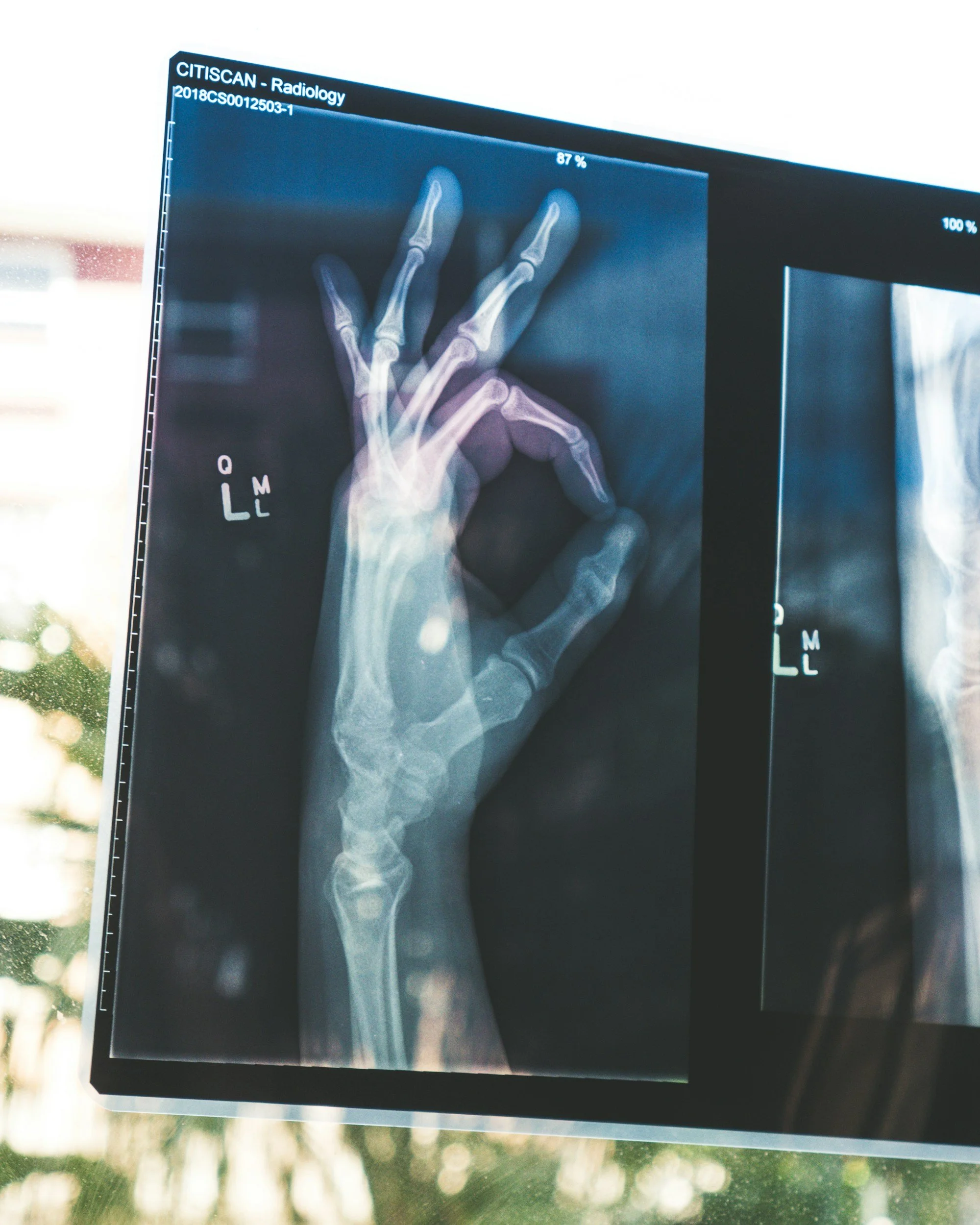
It's Not About Spotting the Break
A few weeks ago, I spent the weekend with Vicky and Caitlin teaching the Fracture Management course for the AHTA. And honestly, every time I teach this course, the same thing hits me — the biggest shift isn't in what people learn. It's in how they start to think.
Because here's the thing most people get wrong about fracture management: they think it's about identifying the fracture and then following a protocol. Spot the break, apply the recipe, done.
If only it were that simple.
What You See Isn't Always What You Get
What I noticed — again — with participants this weekend was a pattern I've seen over and over. When someone looks at an X-ray, their eyes go straight to the obvious fracture line. Which makes sense, right? That's the drama. That's the thing that screams "problem here!"
But what they're not doing is scanning the whole picture. I'm talking about angulation, rotation, alignment, joint position — the stuff that might not jump out at you but absolutely determines where that patient ends up in six weeks.
Subtle subluxation? Missed. Rotation? Not checked. Alignment on the lateral view? Glossed over.
And look, I get it. When you're still building confidence, your brain is working hard just to process what's in front of you. Zooming out to ask "but what am I actually looking at here?" feels like a lot. But that zoom-out is everything.
The Gap Between a Fracture and a Good Outcome
So why does this matter? Why am I banging on about alignment and rotation when the fracture itself seems like the main event?
Because if you miss these things early, you're just not going to get the best possible outcome for the patient. Full stop.
And "best possible outcome" isn't some vague, fluffy concept. It means preserving joint range. Avoiding stiffness. Preventing deformity. Getting someone back to work or sport sooner rather than later. These are real, tangible things that affect real people's lives — and the window to influence them is right at the start.
That's the part that gets me fired up. Early decisions matter so much. The first time you look at that X-ray and figure out what it means functionally — not just structurally — you're setting the trajectory for everything that follows.
It's Judgement, Not a Magic Number
Now, I know what you're thinking. "Okay Vanessa, so give me the rule. What's acceptable? What's not? Give me a number I can work with."
I wish I could wrap it up that neatly. But the truth is, there's no single magic number. What's acceptable depends on which bone is involved, where the fracture sits, the context of the patient. It's judgement. And judgement is harder to teach than a protocol — but it's infinitely more valuable.
What I want aspiring hand therapists to develop is that mental habit of properly reading an X-ray beyond the fracture line. Assess the alignment. Check the rotation. Look at the joint position. Then ask yourself: given everything I know about this bone, this fracture, and this patient — is this acceptable? And if it's not, what do I do about it now, not in three weeks when the stiffness has already set in?
That's the reframe. Fracture management isn't "spot and protocol." It's "interpret, decide early, and prevent stiffness."
Why the Weekend Format Actually Matters
Here's my other soapbox moment (you knew it was coming). I'm a massive advocate for virtual learning — obviously, it's literally in my business name. But there are some things that just don't translate through a screen. Splinting and casting are the big ones. You need to feel the material, see how it moulds, understand the pressure and positioning in your hands. That tactile, practical skill-building is genuinely harder to teach online.
That's why a weekend like this is so valuable. Participants get to practise hands-on, ask questions in real time, and build that physical confidence alongside the clinical reasoning. It's the combination that makes it stick.
The Confidence Piece
If I'm honest, the thing I care about most when I walk out of a teaching weekend isn't whether participants can recite fracture classifications. It's whether they feel more confident. Confident enough to look at an X-ray and think beyond the obvious. Confident enough to question whether something is truly acceptable. Confident enough to make an early call that could genuinely change someone's outcome.
Because that's what changes practice. Not more information — more confidence in how to use it.
And that's what I saw this weekend. Hand therapists stepping into their clinical reasoning, trusting their judgement a little more, and starting to see fracture management for what it really is.
Not just spotting the break. Understanding what it means — and acting on it before the window closes.